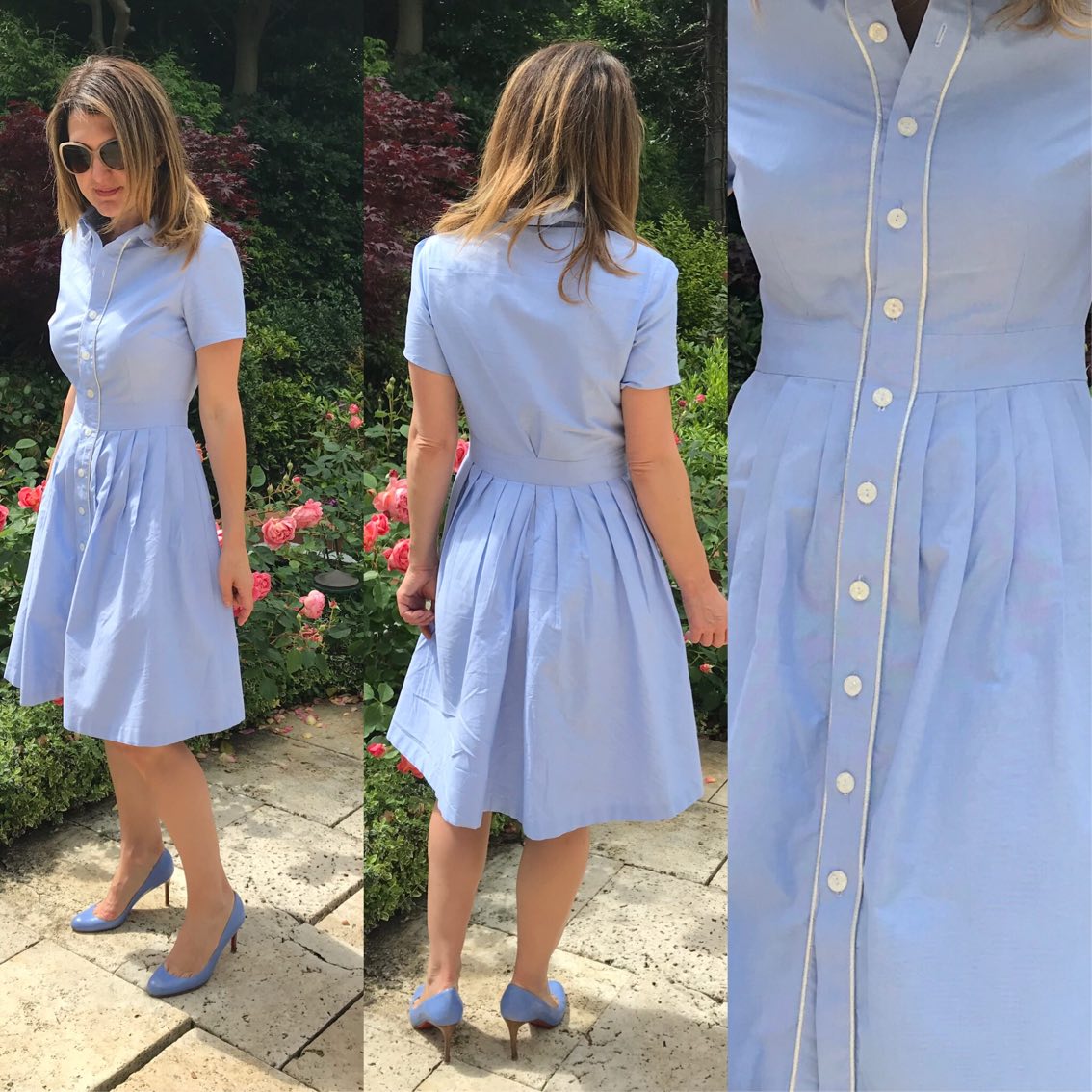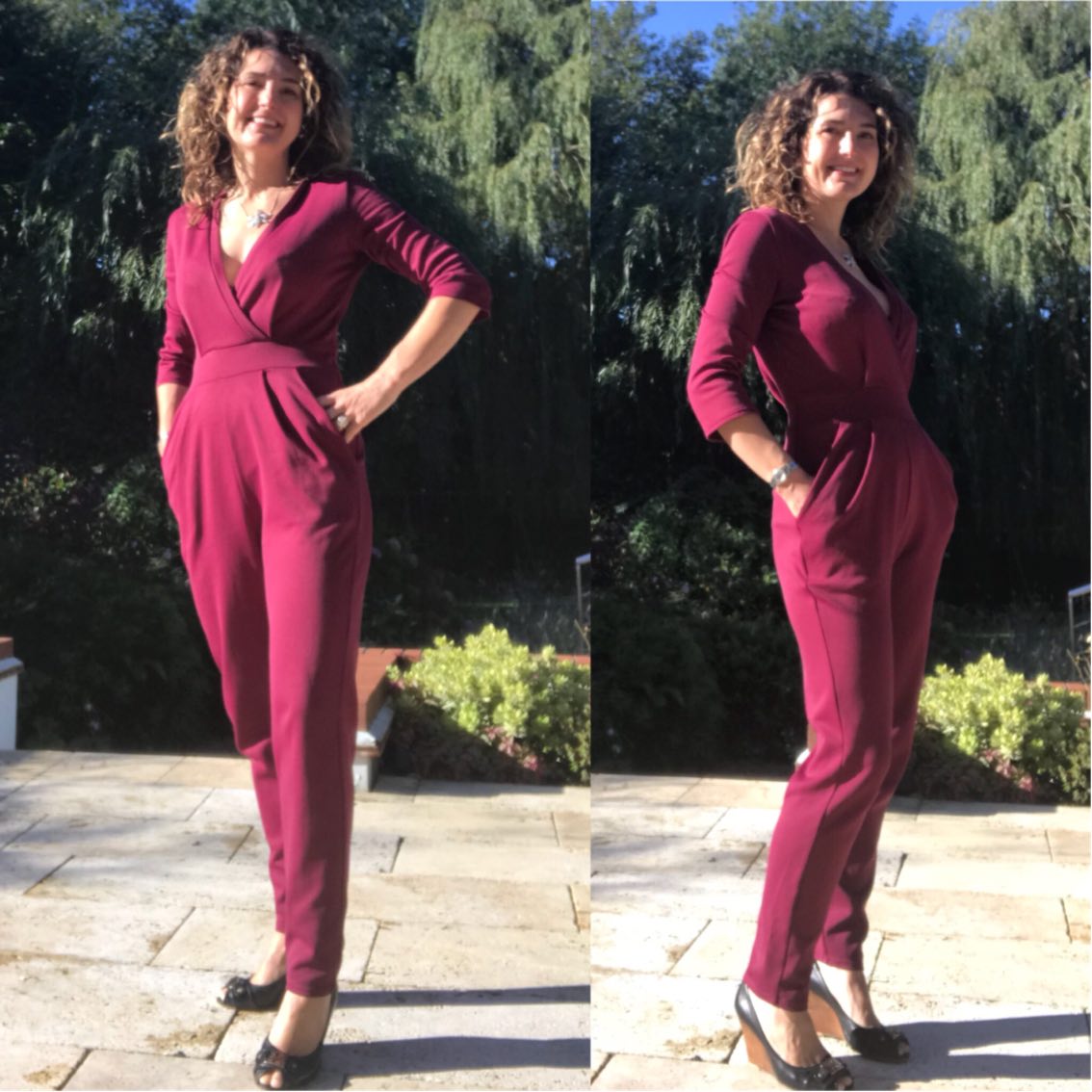
Icon: my first knitted dress
You probably guessed that 90% of my wardrobe is dresses – I seem to sew them by the truckload, fit-and-flare preferably (see my 2020 sewing review if you don’t believe me)… But ever since I started knitted, it had never occured to me that you could knit a fitted dress.
It seems I was wrong: let me introduce you to Icon, my first (and definitely not last) knitted dress. Hurrah!


The Icon dress
This is the Icon dress by Purl Alpaca Designs, to which I added sleeves for extra warmth in the middle of the winter. The initial dress looks like this – how pretty!

I got tempted to knit a dress by Sam_Sew_Good recent Instagram posts of her two gorgeous Miko dresses, also from Alpaca Purl Designs). Miko has very large pockets though, and I am not a pocket person, but Icon and Maddie definitely caught my eye. After an unfortunate try at Maddie – 480 stitches casted, ten rows knitted in the round, and then I realised I had twisted my first round, arrggghhhhh!!!!), I went for Icon and I am very pleased I did.
Pattern and wool details
The Icon dress knits bottom up, flat (ie not in the round). You knit the front of the dress, then the back, stitch both together, finish off the neckline and armholes and there you are. Well, actually, it seems quick but it isn’t: it took me four weeks to make this dress… with no other project going on… and I am quite a fast knitter! With a flared skirt there is just a lot of knitting to be done. And adding sleeves wasn’t exactly a time-saving option…
This is not very complicated knitting though: you need to know how to knit, purl, create a seed stitch and make cables – all quite easily achievable. Once the pattern is established, there is not even that much counting required.

The flared skirt is cleverly designed: you start with the bottom of the skirt, so with the higher number of stitches, then you decrease on the seed stitch sections, which form a triangle until they disappear.

Then when working with the bodice you have to make a few increases and decreases around the armholes, but nothing too difficult either.

The pattern recommends using Alpaca Fine Wool (from Purl Alpaca Design own herd of Alpacas, how cool is that!) but sadly I find Alpaca wool quite itchy. So I knitted in double-strand, using a combination of Baby Merino and Kid Silk from Drops (colour codes 34 and 17 respectively), which I adore and had already used for my Blossom Shawl and my Chuck jumper. I used size 4 needles for the entire dress, as recommended by the pattern, and knitted a size XS because my sample was a bit bigger.

Changes I made to the initial pattern
The initial pattern is completely fine as it is but I couldn’t help making a few changes to it:
- Instead of the picot stitch at the bottom of the dress, which I am not a fan of, I knitted 10 stockinette rows, which when the dress was finished I turned and hand-saw on the inside.
- I substantially reduced the length of the bodice, so that the end of the seed stitch would sit on my natural waist (slightly above the navel) rather than on my high hips. This is due to my personal body shape: I am very curvy so I always prefer to draw attention to my narrow waist that to my wide hips!

- I attempted some sort of Full Bust Adjustment, to avoid my E-cup boobs pulling on the cables. When I reached the under-bust, I added one stitch before and after each of the cable sections, on two front rows (8 stitches added twice); and then took these extra stitches off over the next two front rows. A bit trial and error but I am very pleased with the end result.
- I added sleeves – a LOOOONNNNG process but absolutely necessary for me in the winter!

My two regrets are that I should have make more decreases around the waist area, which is not fitted enough to my taste. And that my stockinette stitch is not super regular, but it never is for an obscure reason… Next time…
Conclusion
This was a long process and I am still trying to work out how to make the waist a bit more fitted; but overall I’m very pleased that I made this dress. It completely demystified the process of knitting a dress and I am ready for another Icon with lace instead of cables maybe. I may even be brave enough the try and tackle Maddie again. We’ll see! In the meantime I am frantically making hats because they only take a couple of hours!!

Taking the V9253 dress from summer to winter
You will remember that the V9253 dress was one of my favourite patterns of summer 2020 (you can see my two versions here and here). So much so I promised myself to make it into a winter version. And here it is, warm and cosy!


Using wool suiting… for a summer pattern!
The V9352 pattern is definitely designed to be made for summer, in lightweight fabric. This is visible from the enveloppe drawing…

… and this is definitely what I used for me summer versions:
However, I thought wool suiting would work well for a winter version. I love this fabric quality for winter dresses, as it is warm without being bulky and very easy to work with. Actually I have already used it quite a bit in the past!

The fabric used from this dress is from Bennytex, my main source of very good quality wool at very good prices. The weight and composition are always specified on their website so no nasty surprises. Another of my trusted wool sources is Croftmill, although their prices are definitely higher.
I had bought this fabric a while ago and was scared to use it due to the pattern matching needed with all these stripes. I definitely did not do the best job here (I forgot about the sleeves!!!) but it does not bother me too much as the front and back are somewhat acceptable…


Tweaks the original pattern
I made four changes to the original pattern.
First, my usual size 10 fit perfectly except at the bust (I am an E cup, which creates constant FBA headaches). So… like for my previous two dresses I made an FBA. Here is a picture of the modified bust piece, it makes the change quite explicit:

Second, I had been quite bothered by the very low neckline on my summer dresses. So I 100% copied my sewing crush Emily Hallman (do read her wonderful article) and raised the neckline by adding 3cm /1 inch at the bottom of the neckline, which progressively blends in as you move up.

This creates a faux-wrap effect at the bodice, which works wonders for more modesty!

Third, I also copied Emily Hallman for the sleeves. She made another version of this pattern, sadly only shown briefly in her Instagram stories, where she gathered the sleeves with a bracelet – and so I did the same (while also lengthening my sleeves by 5cm).

Lastly, I fully lined the dress, because I am a lining addict as you know… Actually, this is mainly to avoid the wool against skin effect, which I cannot bear. Here is the reverse of the dress (sorry for the ugly pictures!):
The one thing I should really have changed and which I didn’t is the positioning of the belt. Each side of the belt is inserted at the back, before sewing the back zip. As result, it pulls on the zip when the belt is tightened – which make the invisible zip very visible (especially when you have run out of matching zips)! Oh well, next time…

Conclusion
Despite the belt issue, I am very pleased with this dress. It is incredibly comfortable despite its fitted look, as the waist ease is just perfect and the sleeve shape is super comfy. To make it even cosier despite its very low neckline, I wear it with a turtleneck thermal bodysuit and 40-denier tights – pretty much my uniform under all my dresses this winter.

Sewing with silk: a new M7974 dress
In my 2020 sewing review, I mentioned that one of the 2020 achievements I was proudest of was to have mastered sewing a silk dress. But the dress was actually never posted on this blog. So here it finally is, in all its silky beauty!


I am all the happiest that I have recently managed to accumulate a substantial silk fabric stock. I was until recently terrified to sew it but not anymore, ha ha!!!
Key advice for sewing silk
This dress was a great learning experience for me. So here are the tips I would give you if you are keen to start sewing silk:
- Don’t overspend on the fabric. The more you spend on silk, the more terrified you will be to use it. So for your first silk piece, I would recommend not spending more that GBP15/EUR18/USD18 per meter. My best source for reasonably-priced silk of good quality is Bennytex. Looking for deadstock is also a good option – I regularly browse through Amotreads‘ stock.
- Pre-wash and iron you fabric as you normally would, except if you are planning to have your dress professionally cleaned in the future. I personally only sew and knit clothes I can machine-wash… but I am the woman who puts all of her husband suits in her Miele washing machine! Wool program, no temperature, 600 spin, it works a wonder for wool, silk, cashmere…
- Go for silk that is slightly thicker or that has texture. I find that silk crepe and silk dupion are easier to work with, as they are less slippery that silk satin for instance. In any case look at the material weight, the heavier the easier.
- USE A MICROTEX NEEDLE, absolutely, even if you can’t find it on Amazon. Using a super-thin (60) general needle will not work a well, with some silks it may pull off strings and damage your fabric for good. And also use thin pins, not standard ones.
- Use a pattern you have already sewn, to reduce the risk of mistakes. Having to unpick stitches is particularly dangerous with silk.
- Line silk with silk if you can afford it, it would be such a pity to lose the softness and floatiness of silk because of a synthetic lining.
- Go SLOW – no need to rush, you are unlikely to want tens of silk dresses in your cupboard (except if you are me), so you have all the time in the world!
Details of my dress
As for my new dress, you may or may not have recognised M7974, which I already sew last Autumn in a pretty polyester fabric with metallic yarn.

I had made an FBA at the time, but it turned out to be insufficient – so I followed the same methodology but made it even bigger.

As for the other changes I made to the pattern, they are exactly the same as those I had made previously:
- no buttons along the skirt front but a side zipper to open the dress;
- longer sleeves elasticated at the bottom to make them more puffy;
- fully underlined bodice and fully lined skirt (with silk lining of course) – because you know I am a lining addict…
And that’s it. Next time I will try and up the neckline, as it is truly too low as it is, even with a very very low bra (forgive the creases, this dress had been worn quite a bit pre pictures).

Apart from this, I am very happy with this dress, but the winter has been so cold that I haven’t had much chance to wear it – looking forward to spring…


2020 sewing in review
My 2020 sewing year was a bit strange. It started strong will my first-ever attempt at planning; got interrupted by a last-minute decision to spend the first lock-down in France, where I had a sewing machine but neither fabric nor patterns; got completely crazy in the summer when I managed to get my supplies back together; and resumed to somewhat of normality in the last part of the year.
In any case here are my favourite projects of the year – dresses, dresses and more dresses I’m afraid:

Here are all the sewing projects I completed over 2020 (not all posted on the blog I’m afraid – this is my big resolution for 2021!); in chronological rather than preference order.
Early 2020
V9327 in suiting wool (fully lined), sewn in January but shot in december – Covid got in between… This was my second time sewing this pattern which I really like for winter, I had reviewed the first version here.

More (fully lined) suiting wool for winter and a first go at my new embroidery machine. I only had 2m of fabric so I only managed to fit the skirt of V9327 and the Named Clothing’s Lexi Top.


My first attempt at replicating a dress I saw in a shop with M7978 – I made a FBA but sadly not large enough so the bodice is a bit tight. All rectified in my second version (more on this one later).

And a completely unplanned funky M7995, for which I made the big mistake of not doing an FBA and which I never wear. We live to learn…

And then we escaped to France and my sewing had to stop for a few months… It was really tough!
Summer 2020: hugely productive
To compensate for my non-existent spring sewing, summer was hugely productive. Instead of being in London, we spent March to August by the seaside in France, so my sewing adapted to the much warmer weather.
I really enjoyed sewing different versions of similar patterns which had been waiting in my stash for a while.
First was V9253, sewn in blue and pink:


Second was M7952, sewn in blue stripes and white broderie anglaise:


Third was the Cassandre dress pattern, which I extensively used as a basis for several dresses:


Fourth was the M7958 top, here as well used several times.


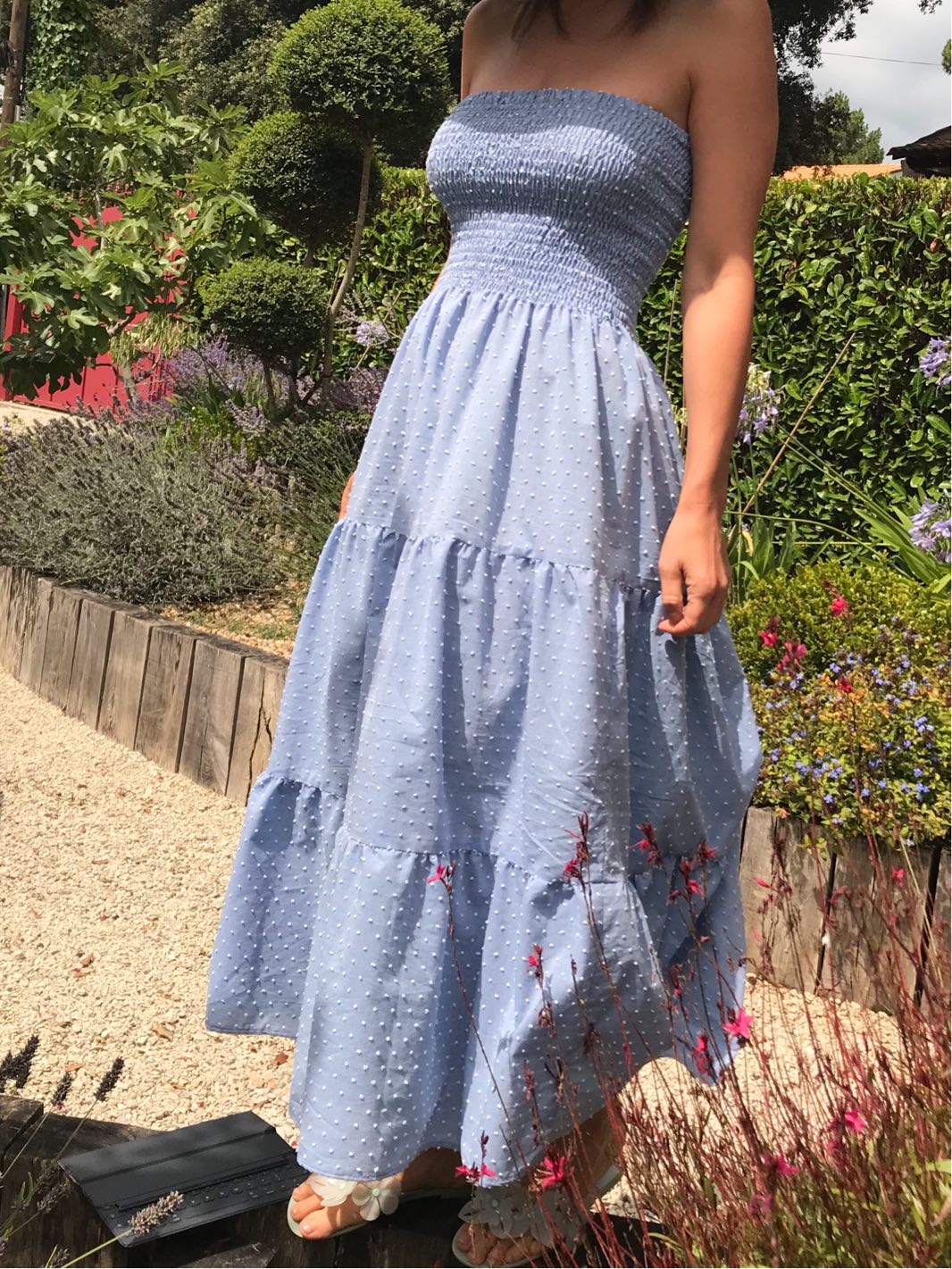
And fifth was my self-drafted shirred dress, sewn in coral broderie anglaise and navy silk this summer, and for which I produced a free tutorial.


Late 2020: more planning, more variety
Back in London in September, I was craving more organisation in my sewing, so I wrote down my Autumn sewing plan – which I am proud to say I mostly followed. This resulted is a bit more variety is my sewing – although dresses remain my favourite by far.
So I started with two Pascal shorts...

… two M8048 coats…


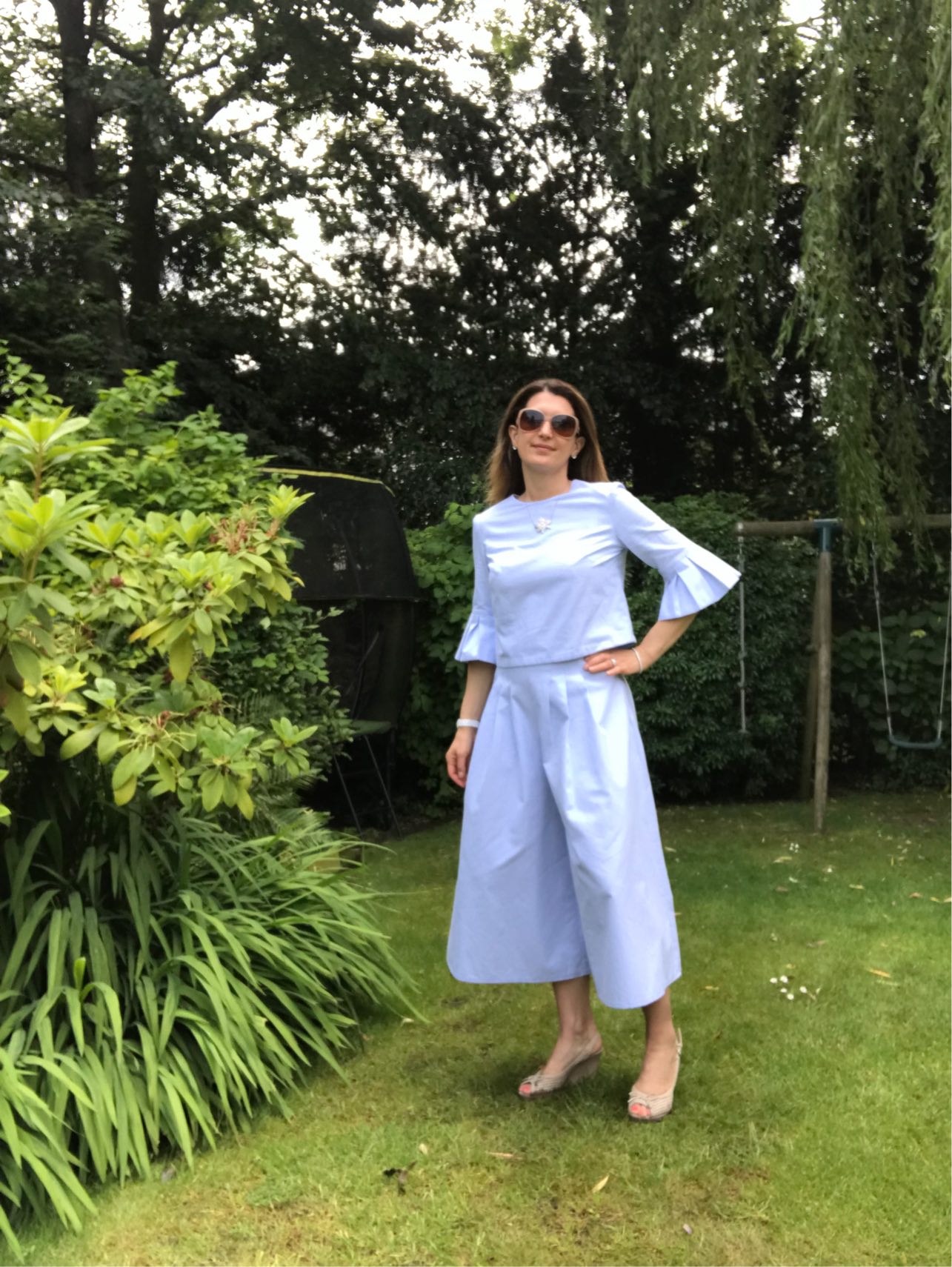
… two box-pleated midi skirts with a full tutorial:


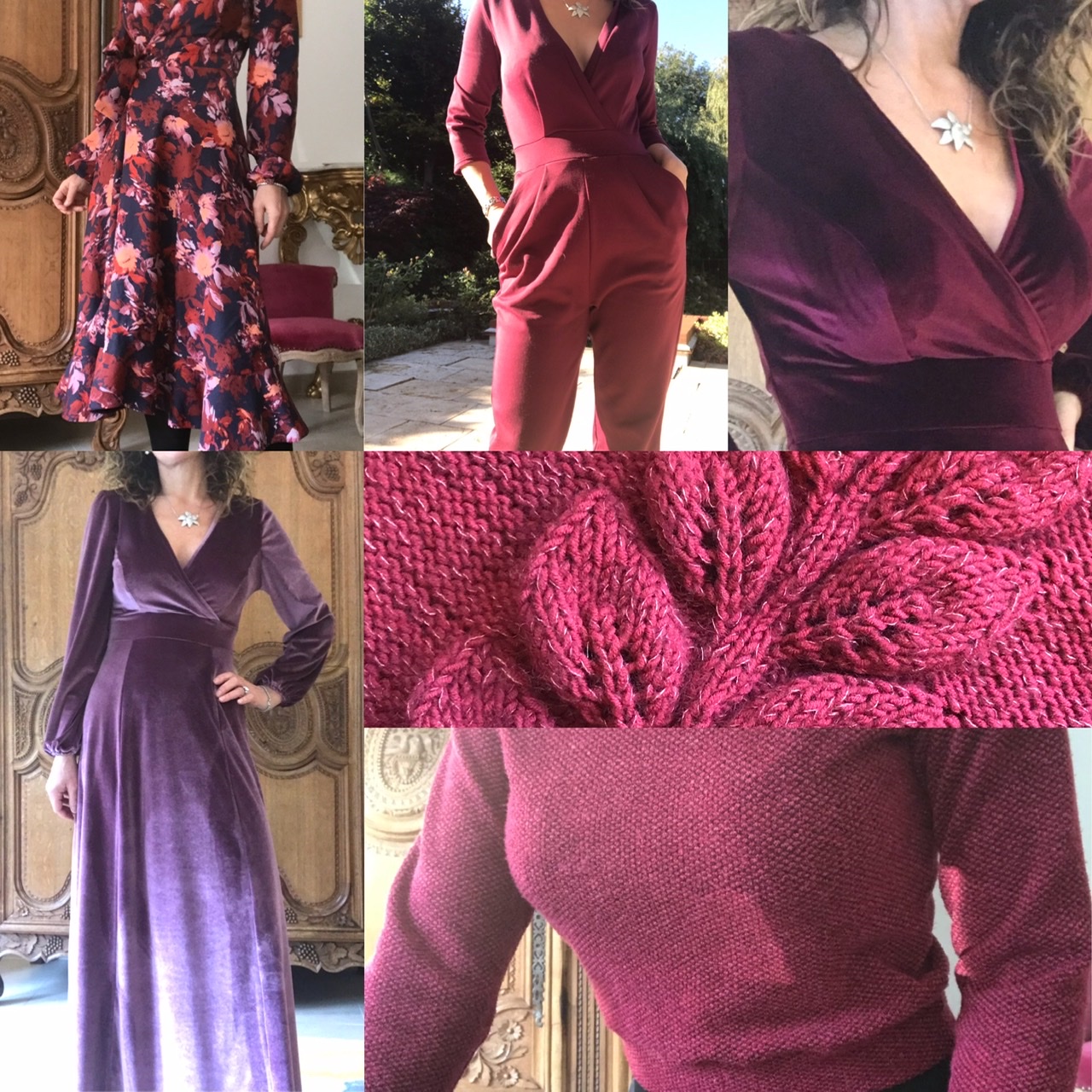
And then more dresses I’m afraid, it is the main thing I wear, especially now that I can knit matching cardigans!!!
So two new versions of M7081 (respectively my fifth and sixth)…


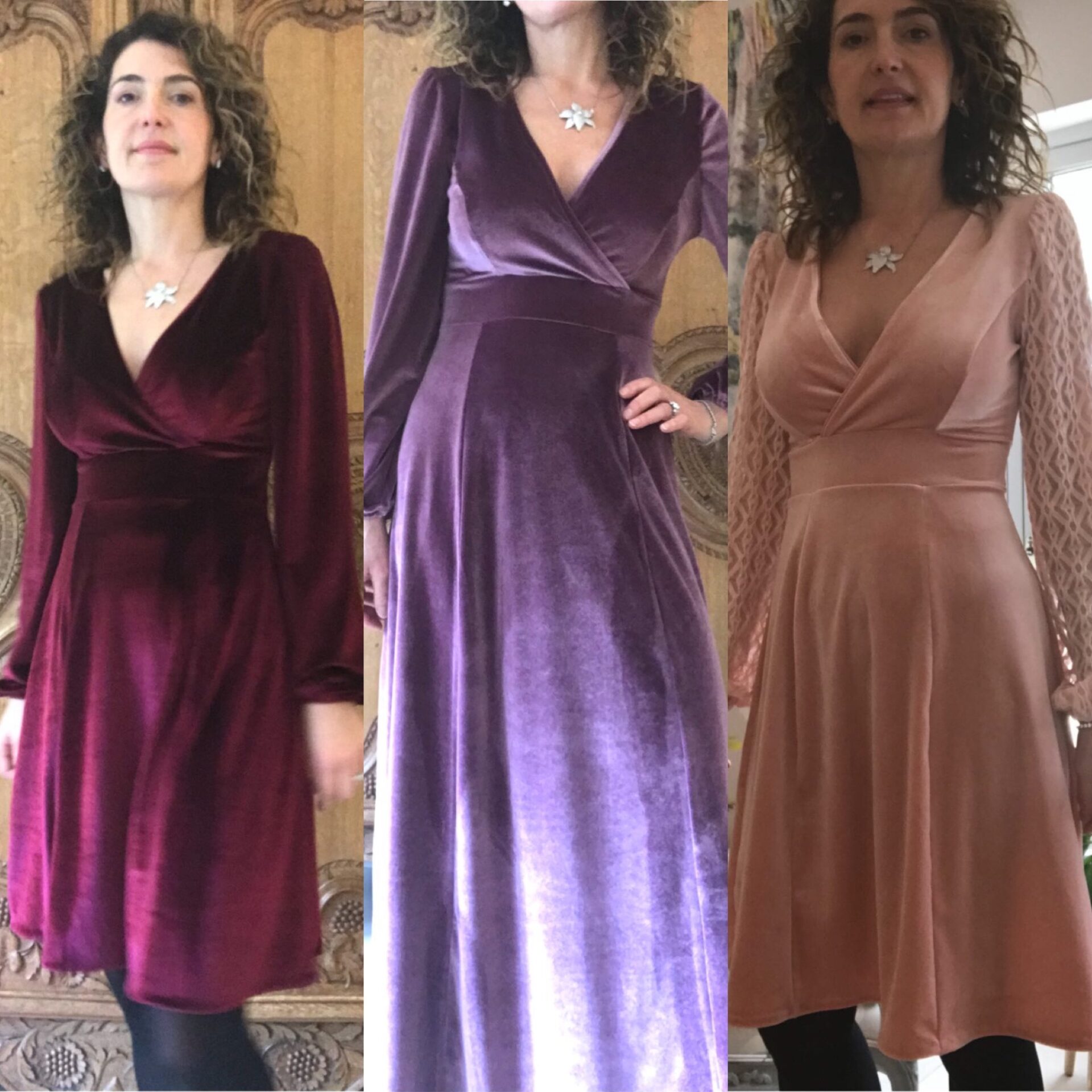
… a new velvet Magnolia (my fifth):

… and two silk dresses , a dotted coral M7978 and a “camouflage” Dior fabric V9327 – both in the most delicate (and for the Dior one expensive) fabric which I took most care of! Definitely my biggest technical challenges of the year!


Conclusion: not the most challenging but still a very happy sewing year
2020 was definitely not a year of huge sewing challenges (except for my three silk dresses), as I was definitely more focused on learning to knit properly from a pattern. But I still had a lot of fun and produced many garments I wear regularly, so I am very happy – and that’s the all point, isn’t it?