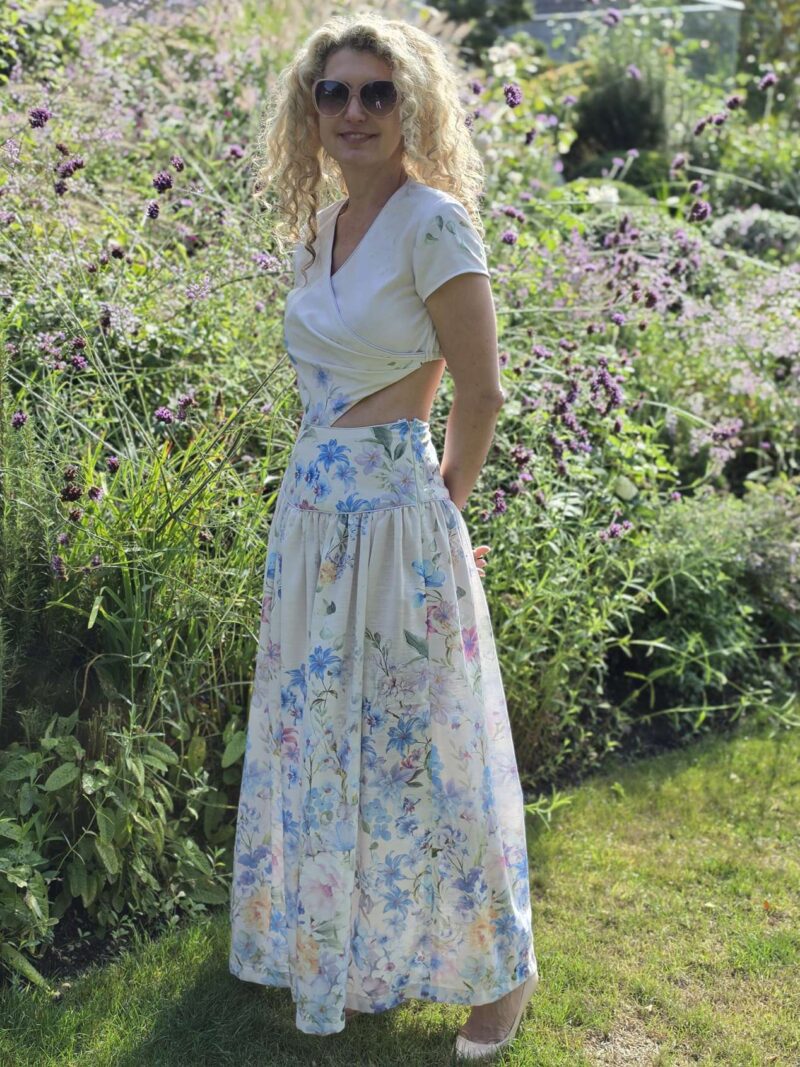
Sewing a new 1960’s dress: Style 3172 Vintage

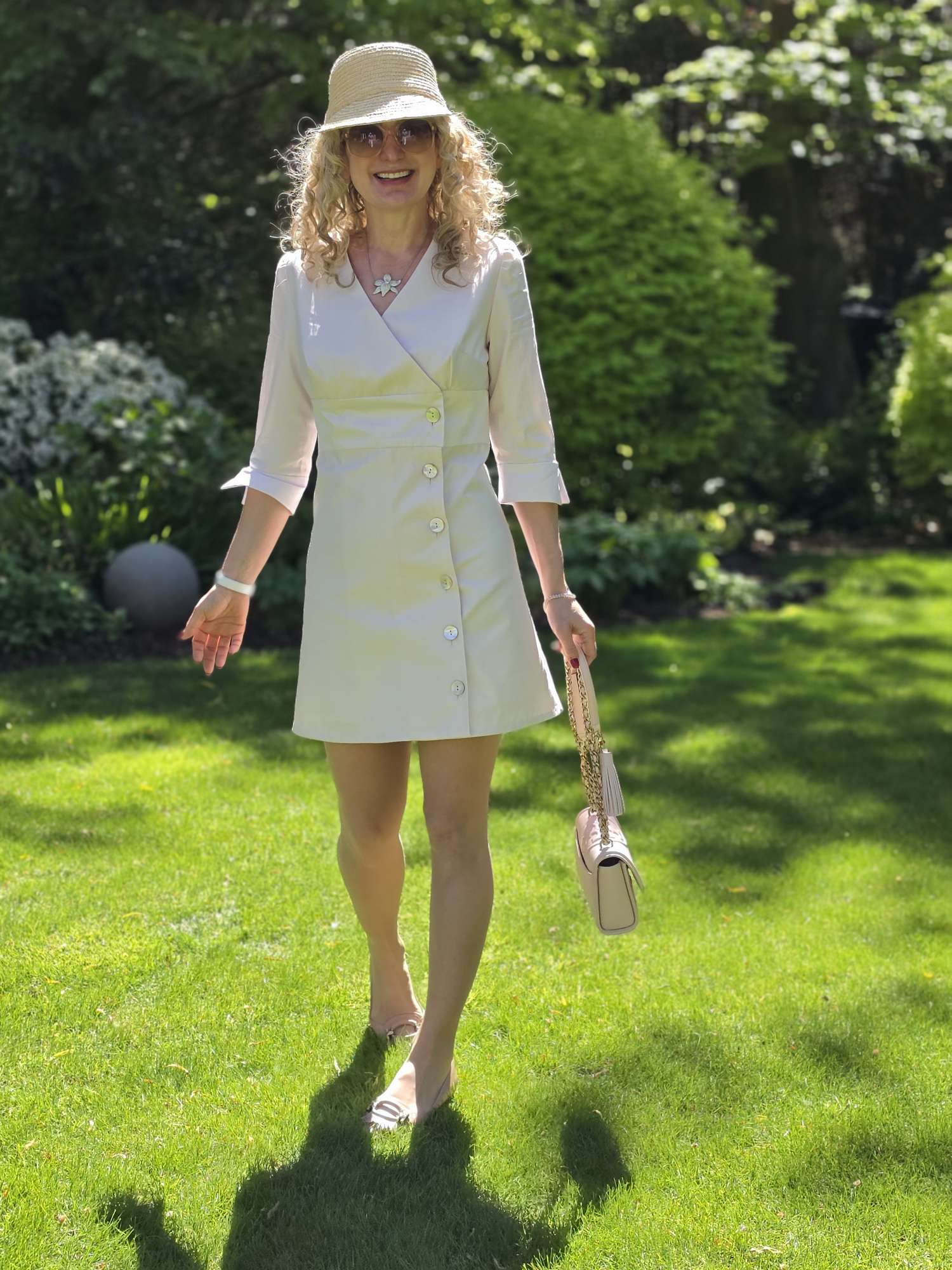
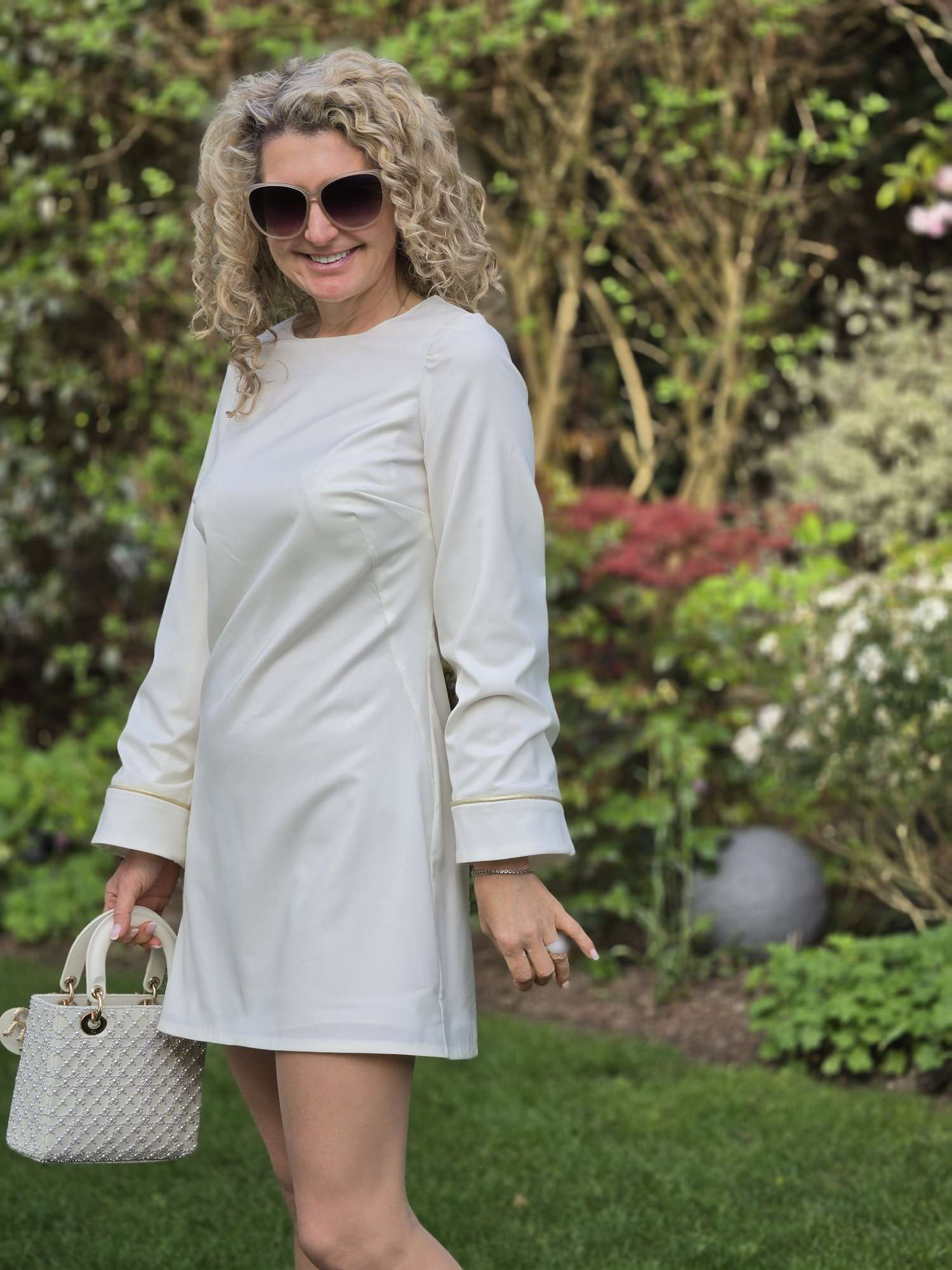
My 1960’s revival obsession continues, as you probably guessed it would… Here is my second 1960’s dress, this time sewn from a genuine vintage pattern: Style 3172.

Sewing vintage… from Vinted!

Ever since I started sewing for myself (11 years ago), my style has definitely changed towards a more vintage look. Not that I did not like it before but it was just quite difficult to find the clothes I wanted without them looking either worn out or plain fake. Sewing sorted out this problem and my wardrobe bloomed into my 1950’s wildest dream!

I have sewn tens of vintage-inspired dresses (mainly 1950’s) from contemporary patterns. But I had rarely ventured into genuine vintage patterns (just once actually). I particularly feared the sizing uncertainty: vintage patterns usually come in only one size; and the cost is high – vintage can fetch quite a high premium on Etsy or E-Bay… Who wants to spend a fortune to end up making zillions of adjustments? Certainly not me!

But then I discovered Vinted. After a (very long) designer shoe addiction phase, I started buying sewing patterns. And what joy! For between £3 to £5 (postage included), you can find real gems… and start building a ridiculously large collection. Here are only the vintage patterns, I buy non-vintage too…

So you can really take the risk of wrong sizing without too many regrets. A toile is never optional though!

Sewing the Style 3172 dress: the process

Introducing the pattern

I had never heard of the Style patterns, being more of a Vogue/ Butterick/ McCall’s/ Simplicity girl. But this dress was far too pretty to overlook – how lovey is this envelope!

Overall it frankly looked a lot like Big 4 pattern, with very clear instructions (which I did not necessarily fully follow but never mind)…

… a flattering shape and lovely details, in particular the crossed bodice and the side buttons…

… but the sizing was a bit of a nightmare!

Adjustments made to the pattern: fit, fit, fit!

Conclusion

As a result of all these effort, this dress is an absolute perfect fit and very comfortable to wear. I also particularly like the soft contrast of colours. All in all I am very happy with this vintage pattern experience and fully ready to tackle more!

Sewing a 1960’s dress: S1609 pattern review

Lately and very surprisingly, I’ve had a 1960’s revival obsession. Bye bye adjusted bodices and circle skirts, all I want is shift dresses. Here is the first of a (long) series.

A 1960’s shift dress, why?

If you’ve been reading this blog for a while, you’ll know I’m a 1950’s girl at heart. Give me a very adjusted bodice, a very voluminous skirt and a Dior Bar jacket and I’m happy! Today’s outfit, all sewn by yours truly, could not be more to the point…

So why a 1960’s shift then? In all honesty, solely for matching purposes. My BFF recently started working in a second-hand designer clothes shop, and thanks to her talents I purchased this absolute beauty of a coat – Prada, wool, so comfy, so perfect for the British spring.

But nothing in my wardrobe to match it, can you believe? Obviously I had to remedy this!

Simplicity 1609 pattern review

I now LOVE buying patterns on Vinted

My other new obsession is buying sewing pattern on Vinted. You can find loads of vintage (and also non vintage) patterns, at very affordable price, and most often unused. So before sewing this dress, I had already amassed quite an extensive collection of 1960’s vintage patterns

But I actually chickened out of sewing vintage, as I know from the experience of this shirt that sizing can be a bit unpredictable. So I opted for re-edited vintage (also bought for a bargain on Vinted, widely reviewed and highly praised on SewingPatternReview.com.

What are Simplicity Jiffy patterns?

S1609 is part of the Simplicity Jiffy range, which according to my very extensive research on Vinted (hum hum) has been around for ages. These patterns are basically supposed to be easy-peasy, with minimal pattern pieces, as few as possible technical points and limited need for fitting.

And S1609 definitely fitted these criteria: two main pattern pieces (one front, on back – then obviously you need to use sleeve and neck facings); an invisible zip to fit at the back; and just bust fitting – which meant a FBA (full bust adjustment) for me.

FBA my main challenge

This dress was an absolute delight to sew and the fit is truly very good – just loose enough at the front to create a trapeze shape, but well fitted at the back so that it does not look like a potato bag…

I used a size 10, as I always do for Vogue/ McCall/ Butterick/ Simplicity and it fitted perfectly… except for the bust! I am a 32E/ 85E and I always, always need a FBA. I basically needed to add 2.5cm, which I put all in the side bust dart (no way I was touching the waist dart), here is a picture of the resulting front pattern piece.

I recently found this very detailed guide for bust adjustments and it has been a God-send, I strongly recommend it to anybody who has to fight this battle.

Other changes to the pattern

Other than the FBA, I made a few other changes to the pattern:

Conclusion

This is a great basic pattern for a shift dress, which I will definitely re-use widely. And it is perfect to wear with my new coat so all boxes ticked. I am delighted!

Sewing a maxi bubble skirt

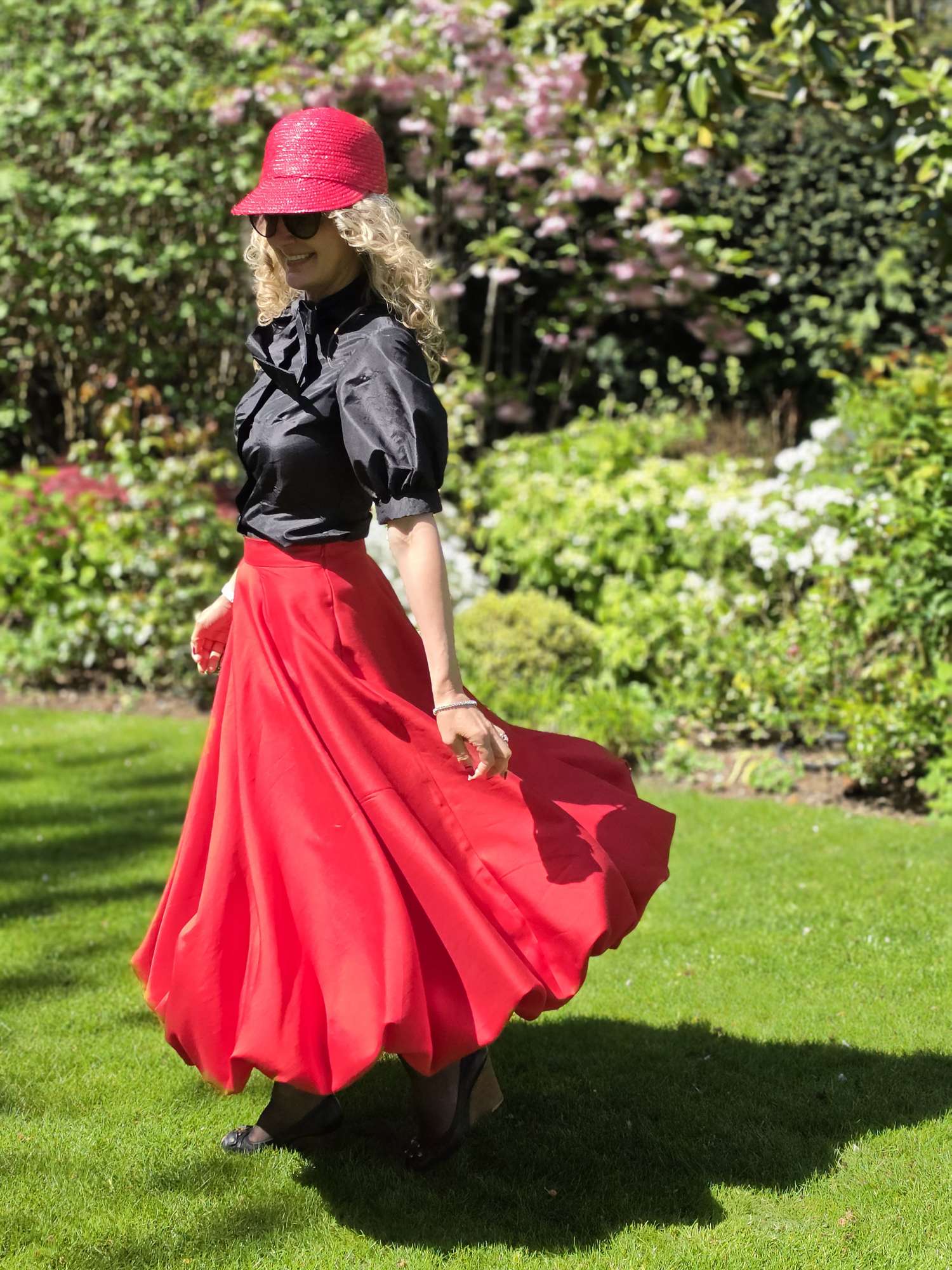
After many months of looking for the perfect pattern, here is my self drafted maxi bubble skirt! Exactly the way I wanted it to be so well worth the wait…

The (unsuccessful) search for the perfect pattern

I have been wanting a bubble skirt for myself for a very long while – probably years rather than months to be honest… I am like that: I get fixated on an idea and I will not relent or compromise until I get exactly what I want (ask the company that built our house, they know…).

If you google “bubble skirt pattern” online, the only things that come out are very bubbly at the bottom – which is what we want… but also very bubbly at the top – definitely NOT what we want. The golden rule of any pear shape girl like me is DO NOT ADD ANY VOLUME AT THE WAIST.

Anyway what I found were things like these (no offense to the pattern makers, just not fit for my body type)…

Sadly I am not good at self-drafting, I can tell you. I have a very precise idea in my head but I always seem to get either the measurements or the proportions wrong. So it is with great reluctance I decided to self-draft my maxi bubble skirt… and this time was a success!

How to self-draft a maxi bubble skirt

Word of warning: I used skirt patterns I have from previous dresses, namely B6446 and V9327. I have used these skirt patterns so many times that they are full or holes and tears, but I fear changing them by even a millimetre as they work so well. But you can use the circle skirt calculator from By Hand London, which is completely free.

Anyway, here are the steps I followed – sorry I took no progress pictures…

  1. Cut a full circle skirt of the length you desire + 12.5cm + sewing allowance (1.5cm for me). Mine is based on a 90cm long skirt in total, so it requires about 5m of fabric cut crosswise (perpendicular rather than parallel to the selvedge) to get no middle front or back seam.
  2. Cut a quarter circle skirt, 12.5cm shorter than the full skirt + sewing allowance. Here there is far less fabric needed (2m) and you can cut as you usually do if the fabric is 145cm wide or more.
  3. Overlock and sew side seams for both skirts, allowing space on one side for the zipper.
  4. Sew two gathering rows at the bottom of the full skirt. There is a lot of gathering ahead of you, so I would strongly advise you mark the quarters of both skirts before proceeding, so that your gathers are evenly spread.
  5. Progressively gather the bottom of the full skirt and pin it to the quarter skirt, right side to right side. I advise you proceed quarter by quarter. It takes forever but never mind…
  6. Sew bottoms of skirt together, check for potential puckers/ holes and sort them out.
  7. Remove the gathering threads and turn the skirts inside out so they are now wrong side to wrong side (how you will wear the skirt) and the gathering is enclosed.
  8. Attach the waistband at the top. Mine is a rectangle of fabric, INTERFACED and overlocked on small side. Width is: waist + 4cm ease + 1.5cmx2 sewing allowance. Height is 4cmx2 + 1.5cmx2 sewing allowance.
  9. Insert invisible zipper on the side, catching both skirts. You can have a nicer finish here by not catching the underskirt in the zipper and attaching it afterwards, but lets keep it simple.

AND YOU ARE DONE! Nice puff at the bottom…

… but no puff at the top and a nice slim waist:

Conclusion

Super happy with this one although I am not sure how it will iron… Thankfully the fabric is a gorgeous silk/wool blend so it does not crease too badly/

Let me know if you would like a full tutorial, it may motivate me to make another of these beauties!

Summer sewing: the white jumpsuit

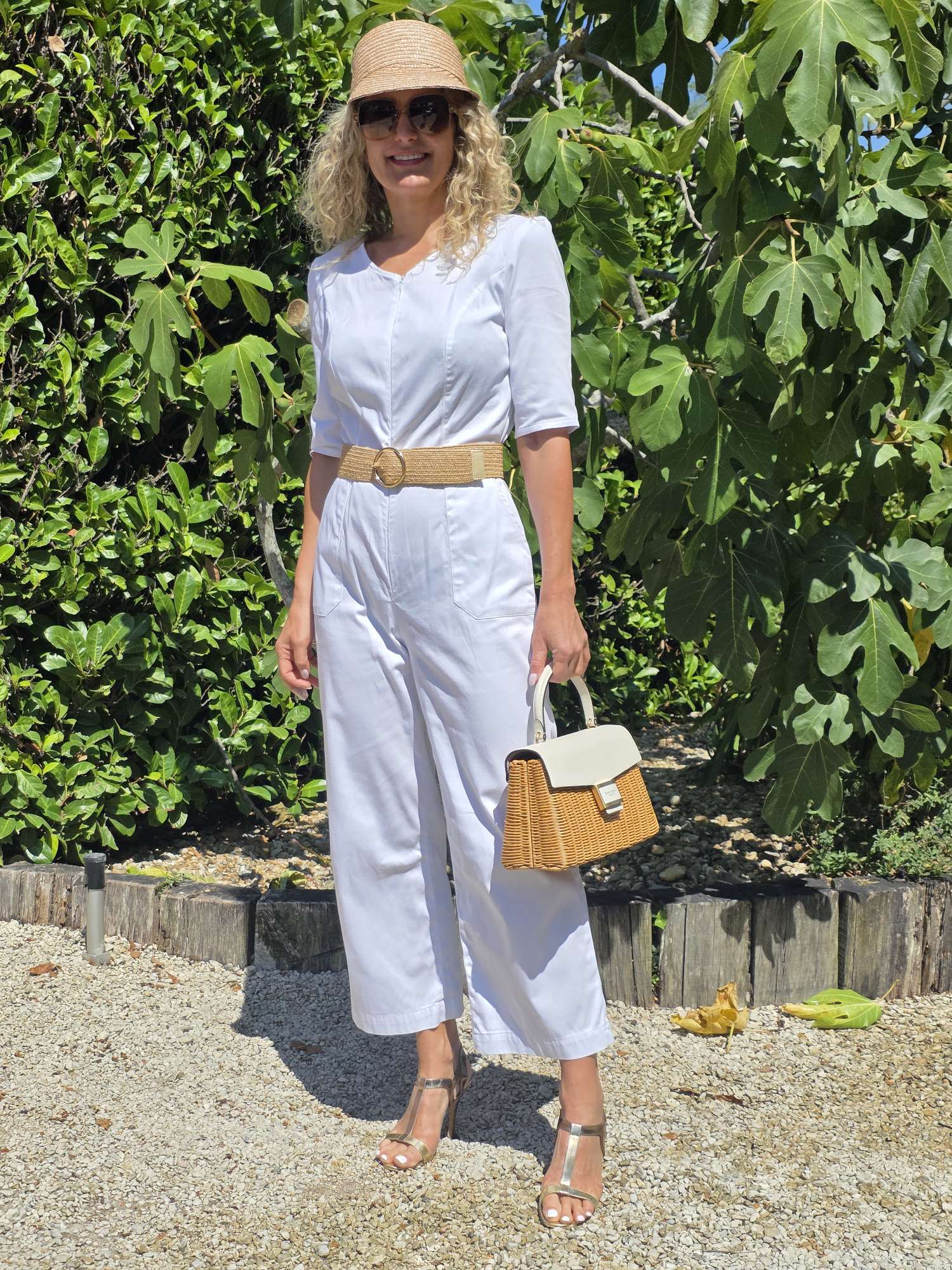
For once I didn’t sew only dresses this summer, I also ventured into their trousers equivalent: the jumpsuit. And since I am a big lover of summer whites (even more so since I discovered Vanish Oxi Action to remove sun cream stains), my summer jumpsuit had to be white.

Pattern: I used the McCall7908/ M7908 pattern, which I had already sewn (three times) and reviewed here four years ago (how time flies).

I had gone through a fitting ordeal then so I was keen to reuse this pattern ad-nauseam. But I only got the pattern out of its envelope this winter for 3 winter versions (long sleeves, long legs) – I seem to only sew this pattern in bulk! Do not hold you breath for pictures, my blogging apnoea means I took exactly none!

Sizing: size 10 for my UK 8/ FR 36/ US 2, this is my standard size for Vogue/Butterick/ McCall’s/ Simplicity patterns, despite the size chart telling me I should be a 12/14. However I made a HUGE number of adjustments to have this jumpsuit fit me properly, explained in details here. Jumpsuits are usually a minefield for me, as I have a long torso (and short legs, to my great despair), and this one was no exception.

Changes to the pattern: I made a large number of fitting adjustments: lengthening the torso by 3cm/ adding 1cm width at the hips/ slightly reducing the crotch length/ taking a bit of width off the back both at the trousers top and the bodice bottom (swayback adjustment). And then I lost weight after sewing my jumpsuit and it is now a bit too loose but never mind! The other change I made was to replace the exposed font zip with a concealed one, I never quite understood how to neatly sew the exposed zip, and in any case I find a concealed one much more elegant. Lastly I changed the neckline from a V to a round shape.

Level of difficulty: I would classify this pattern as intermediate due to the fitting struggle and the obscure installation of the exposed zip.

Fabric used: I used a lightweight denim-like fabric in a glorious white cotton from Croftmill, which is still available here. It has a bit of stretch, which I would strongly advise for this jumpsuit despite the instructions advocating plain-vanilla woven fabric.

Likes: there are quite a few things I really like about this jumpsuit (which, given it is my 7th version, I am sure you had guessed):

Dislikes: unfortunately I don’t think I have had so many dislike for a pattern for a while (that said I nearly solely make dresses so they are not the same challenge):

Conclusion: despite all my reservations I really like this jumpsuit. I’ve worn it loads over the past few months and it has made me really keen to expand my jumpsuit sewing skills – I just need to brace myself for a lot of fitting work…