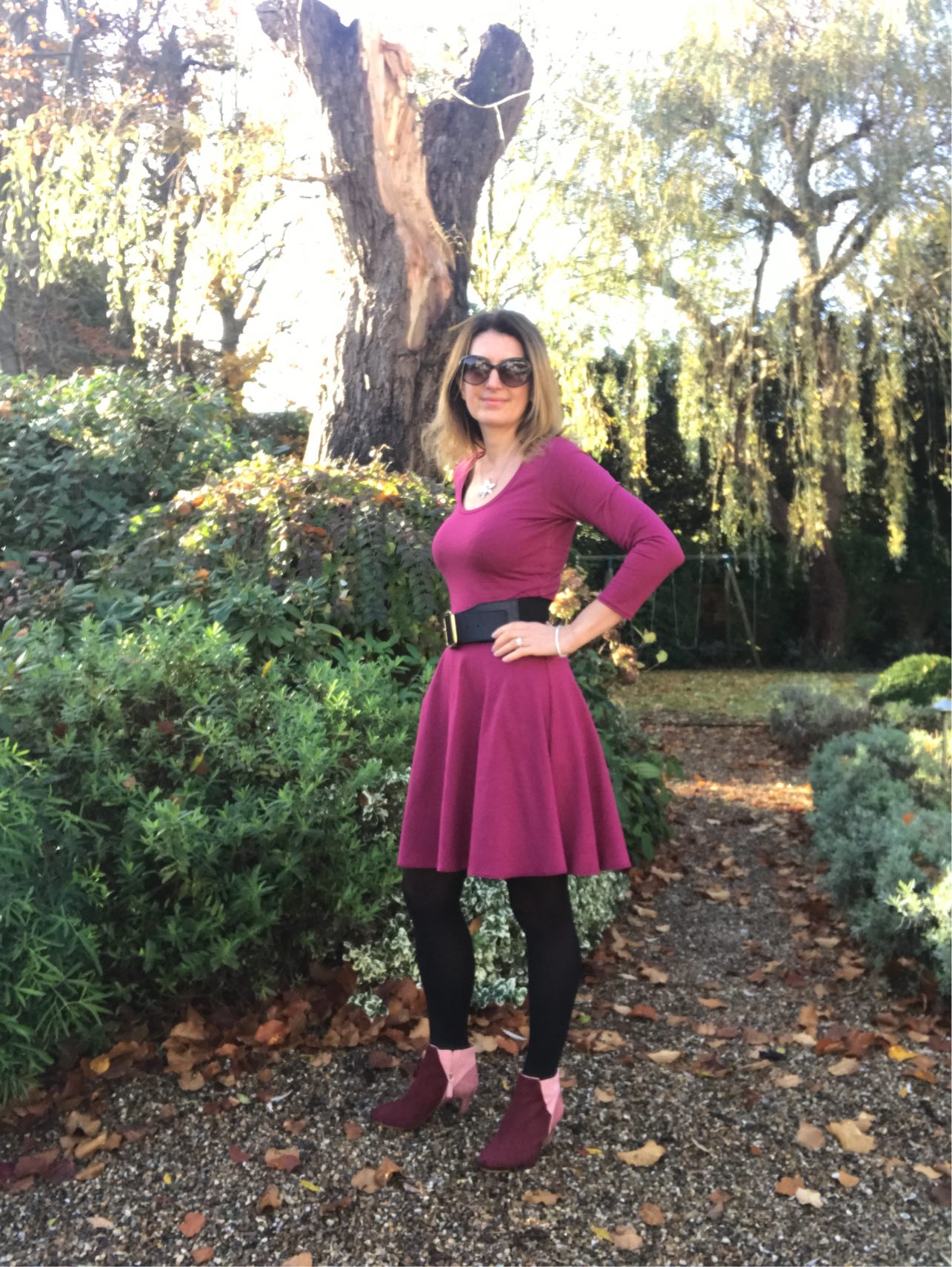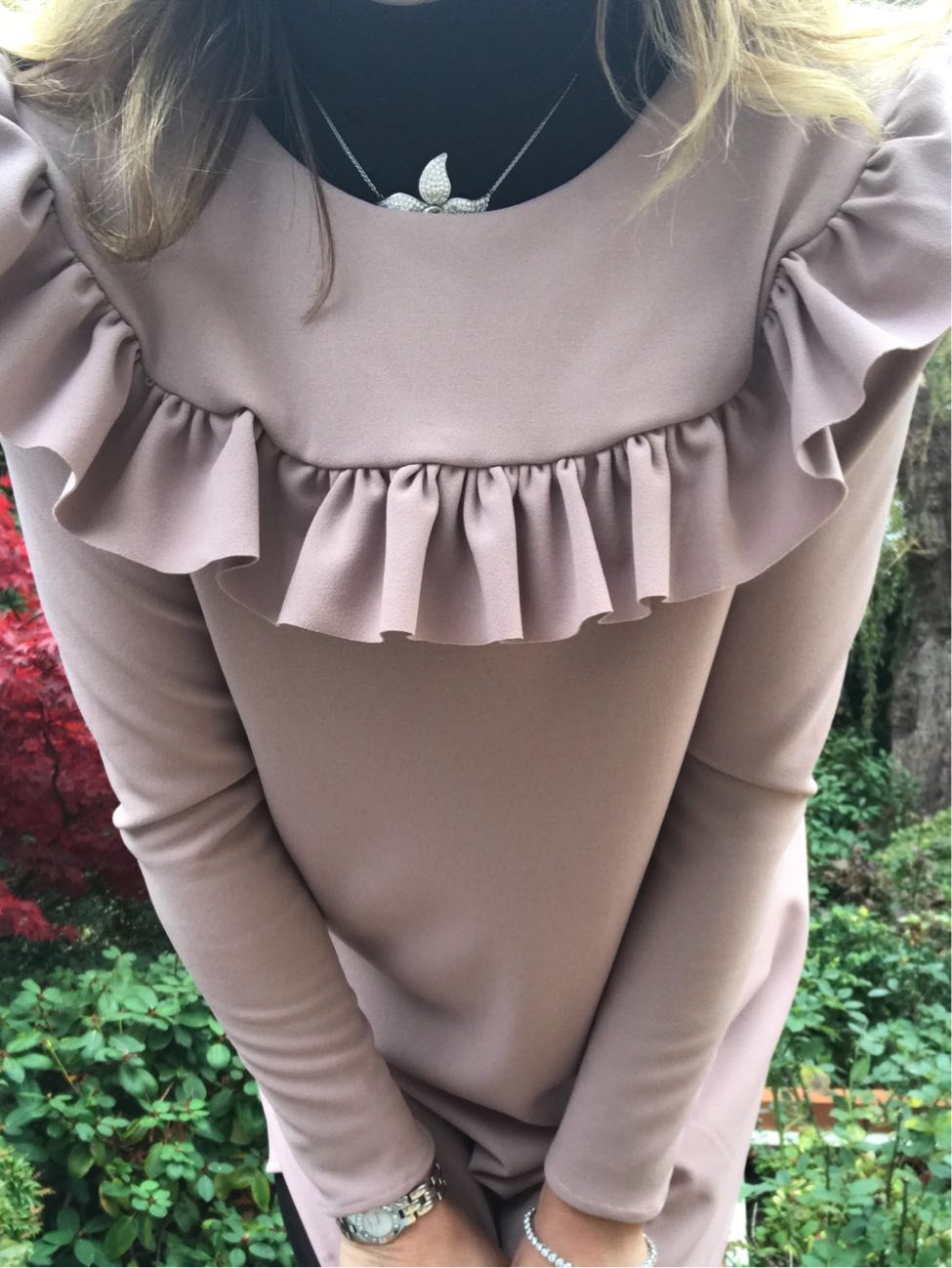
Cassandre dress pattern hacks

After sewing my first version of the Cassandre dress (review in this article), I had many ideas of how to hack the pattern – specifically the back and the shoulder straps. So after sewing my green Cassandre dress, I immediately made another …two! So typical!

First Cassandre dress hack: with a knotted back

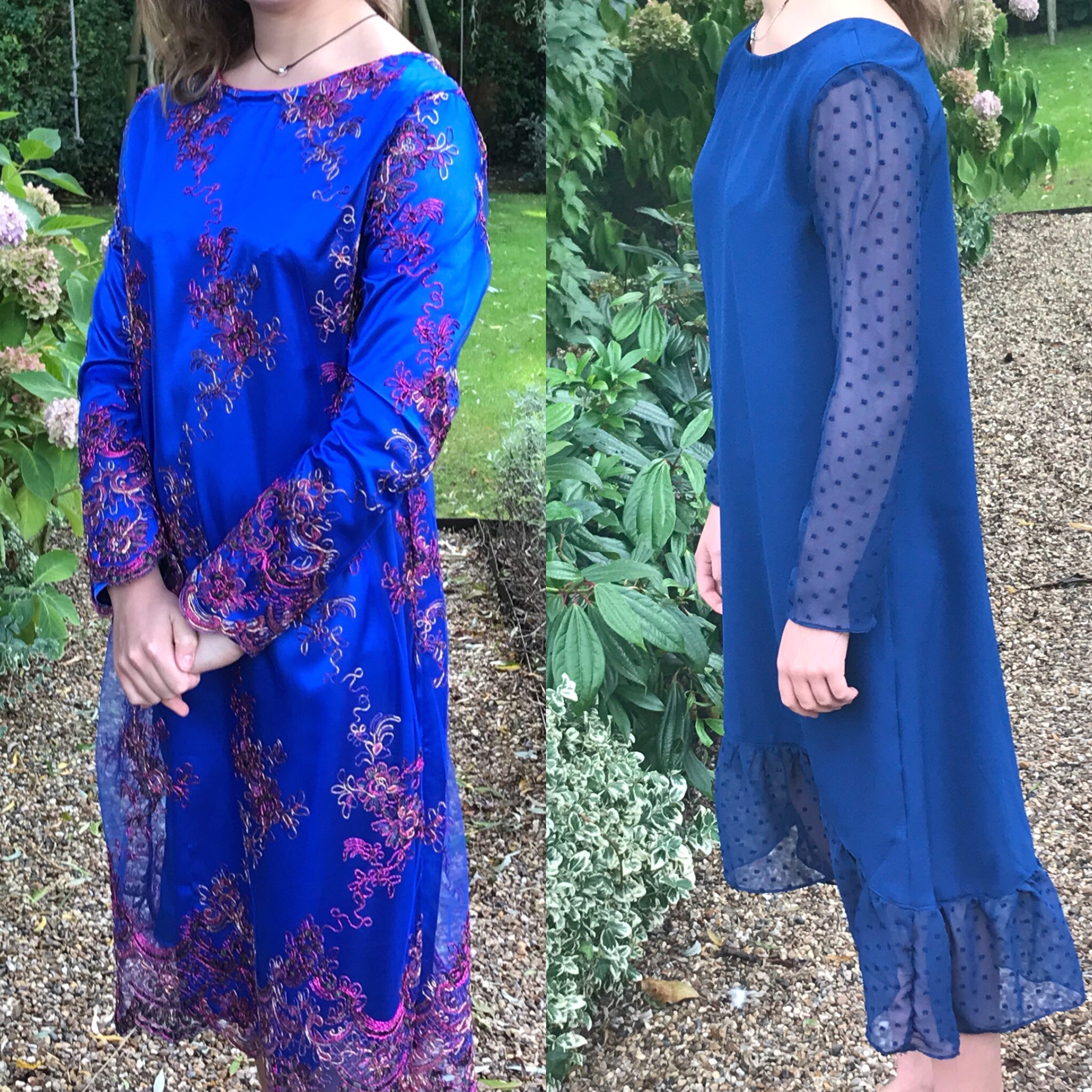
So here is my first hack: a knee-length version with a knotted back, in a beautiful embroidered cotton from Un chat sur un fil.

My inspiration was this dress from patterneasy.com, where I particularly liked the high waist, the heart-shapes neckline and… the knotted back of course!

After defying the Russian website and managing to buy the PDF pattern, I got very discouraged by the 60 pages to print and the guaranteed need for a full bust adjustment. I started thinking hard about other options and then realised that by combining the Cassandre skirt and a tweaked version of the McCall’s M7958 top (already used here), I could manage something quite similar.

I used view A of the M7958 top as a base. To draft the knotted back on my existing pattern piece, I used the back piece of the Glory top, also from Clematisse pattern, which I made for my daughter earlier this summer but never blogged. This is a very pretty top and a super-easy super-quick make.

Here is what my back pattern piece looks like versus the original one:

I also lowered the front piece neckline to achieve something looking more or less heart-shaped – I love round curves and I was not a fan of the straight lines of the original Cassandre bodice.

I struggled to figure out how to attach my shoulder straps to the back, so instead I made them knotted at the neck. I am very pleased with this choice, as the two knots complement each other.

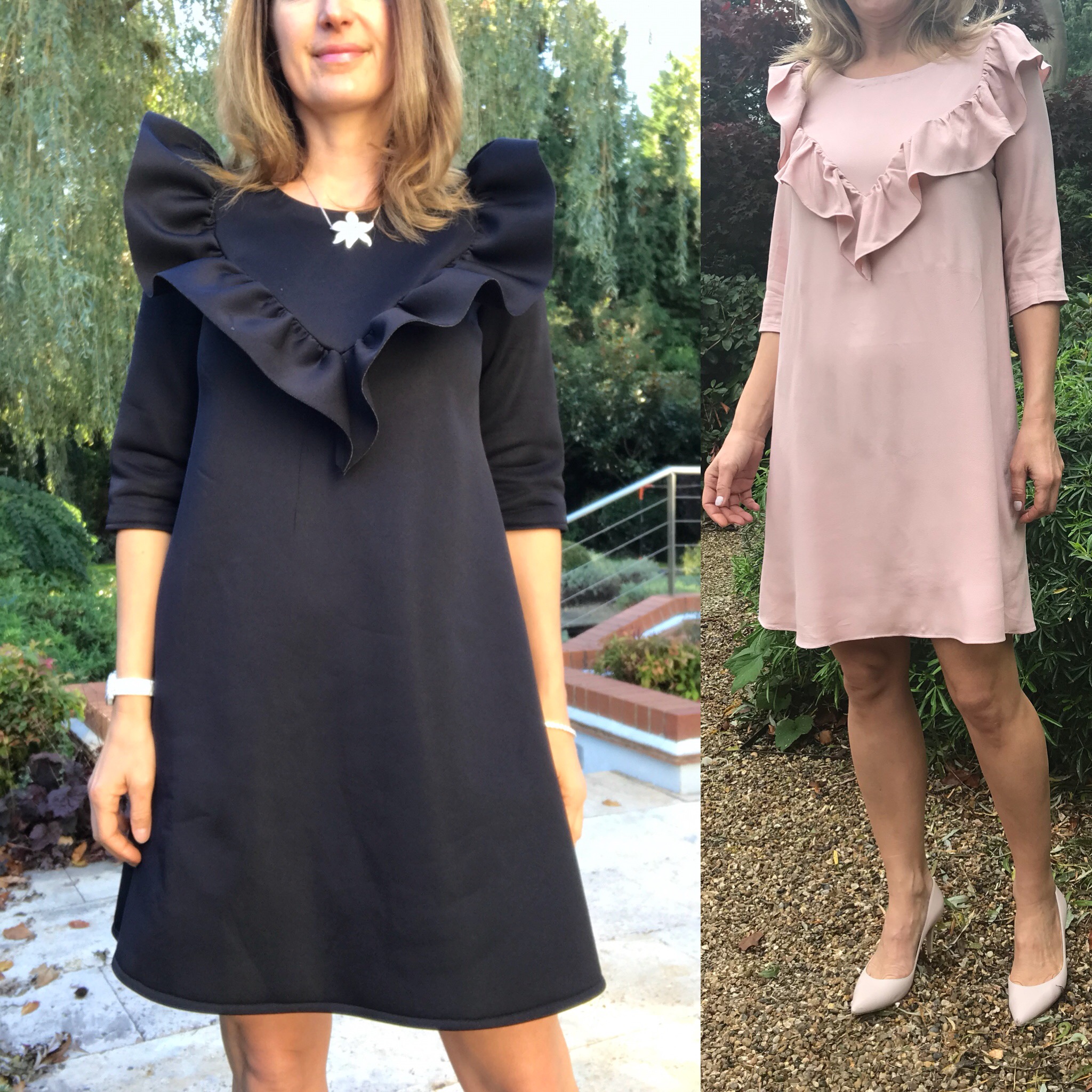
Second Cassandre dress hack: Sezane-like with large shoulder straps

And then came the new Sezane collection, among which a number of pieces looking surprisingly similar to popular indie sewing patterns. Quite funny, as usually it is the French sewing community trying to replicate the Sezane collections. Anyway, meet Graziella by Sezane dress, very Cassandre-like in my view!

Here the two big changes versus Cassandre as the low cleavage and the very wide shoulder straps – nothing massively difficult to replicate! I reused my M7958 pattern, keeping the heart-shaped neckline at the front and transforming the back piece into a triangle; and I widened the straps to 4.5cm – et voilà!

I pondered for ages about replicating the tiered skirt of the Sezane dress but then just went for a simple skirt – I am still thinking I could do it if I order a bit more fabric. Decisisons decisions…

Talking about fabric, this one of a cotton lawn from Croftmill, very lightweight and completely in my summer blue colour scheme with its delicate impressionist floral motif. I am very tempted to order more, tiered skirt or no tiered skirt…

I am not sure I am completely done with Cassandre yet, as I would still like another version in a similar quality to my green one – although I really like my latest two cotton versions, polyester sateen is definitely gorgeous for this pattern and I have just bought three meters… Oh well…

Cassandre, the ultimate summer dress

No matter how successful a pattern is with the sewing community, I usually take ages to sew it – for instance I was two years late to the game for the beautiful and massively popular V9253 dress! (my two versions are here and here). But the Cassandre dress pattern was just too pretty to resist, and far too appropriate for my beachside summer, so here is my first version (of many too come, beware!).

Cassandre dress pattern review

Cassandre is the ultimate summer dress: with it diminutive front bodice, its naked back and its floaty, floor-length skirt, it is the most comfortable thing to wear on hot summer days. I find the style of this dress absolutely gorgeous- although very different from the much more fitted dresses I usually sew and wear.

The skirt is attached to the bodice in the most clever way, via a narrow flat elastic, which allows to pull the dress on and off without any zipper. The skirt ruffles are not sewn within the seams but are visible on the outside, which gives the dress its very distinctive look.

My only reservation about this dress is the front bodice fit, which I find far from perfect – but to be honest I should really have made a full bust adjustment and a muslin and I didn’t bother, so this is largely my fault. For my next versions I will probably used a tried and tested bodice instead of the pattern one.

Fabric used

As soon as I discovered the Cassandre pattern, I visualised it in this very fabric I had in my stash – a silky polyester satin with large palm prints from Croftmill. The colour-scheme is not my usual but the palms are so appropriate for a beach dress. The fabric was quite slippery to cut and work with, which did not help my bodice fit, but it is so comfortable to wear in the heat that I am (nearly) ready to forget this.

That said my next versions will be in something a bit less difficult to work with – I have some embroidered cotton and some cotton lawn lined up.

Hacks and adjustments to the pattern

The pattern indications are extremely detailed and straightforward. The one thing I however modified was the length of elastic used for the waist, which I reduced substantially. I had seen many version of Cassandre with a dropping back and I really wanted to avoid this look, so I measured my own waist for the front elastic; and I cut the back elastic in situ.

I also played quite a bit with the back straps. The pattern originally comes with two straps, which can be crossed on the back or bowed at the neck. I made four and positioned then in double-cross, a very fun idea but which took me absolutely ages to adjust (and with a lot of help from “Carl” (Lagarfeld), the name I give my husband when he gets involved in my sewing projects).

But I have many ideas on how this dress could be hacked further so do expect to see more versions on the blog soon…

My first silk shirred dress

You know my love for shirred dresses and my quasi industrial production over the past two years – I hardly wear anything else in July and August so this is totally justified in my view! Most of my shirred dresses are in lightweight cotton (voile, Swiss dots, baptiste), a few in satin polyester (surprisingly fresh for a non-natural fibre) but I had never dared shirring silk until… now! Tada, here is my first silk shirred dress (and without doubt not the last!):

I had never tried to shirr silk before because I dreaded tearing the fabric while shirring – the bobin needs to be threaded with elastic, as I explained in this tutorial, and I thought this might be too thick to be compatible with silk. However, it turned out that the only thing I needed to change was my needle: I used a Microtex needle and the sewing process what incredibly easy. The shirred part of the dress is very similar to that of all my other shirred dress and I genuinely had no issue whatsoever.

The silk fabric is from Bennytex, my go-to online shop for amazing bargains. They recently had a big arrival of silk and I ordered like a madwoman, as I am a real fabric snob and I will always prefer natural materials (wool, cotton, silk) over man-made – especially when they are so affordable.

This one is described as a silk crepe (although the structure is very regular), it is opaque navy with irregular white dots and it is fine but actually a pleasure to work with.

This new silk dress is a twin to this maxi shirred and tiered one, for which I wrote a very detailed tutorial.

For once I added shoulder straps. I cut two 150x5cm rectangles, finished the sides with very narrow zigzag stitches and sew two lines of shirring; then adjusted the length in situ. I crossed the straps in the back and I am quite pleased with the result.

Not much to add about this beauty, which will get extensive use like all my other shirred babies.

YOU MAY ALSO BE INTERESTED IN THESE THREE FREE TUTORIALS:

TUTORIAL: SHIRRED DRESS. SO EASY!
L’attribut alt de cette image est vide, son nom de fichier est C324F013-2D37-4BA9-A756-81C10FBC4926-768x1024.jpeg.
TUTORIAL: maxi dress, tiered and shirred
TUTORIAL: off-the-shoulder ruffle dress

Tutorial: off-the-shoulder ruffle dress

If you make a smocked dress with one of my tutorials, do not hesitate to use the hashtag #smocksmignons so that I can admire and re-gram it!!

I have an adoration for shirred dresses in the summer: they are fresh, sun-tan compatible and most importantly extremely easy to make without a pattern. Here is a small selection of my handmade shirred dress collection (I obviously have more than eight…):

I have already written tutorials on the two dresses below (just click on the pictures to get to the blog articles)…

… but I get asked many times about these two – specifically how to add an off-the-shoulder ruffle to a shirred dress.

So here we are, I’ve finally managed to get my sewing machine in shirring mode again (this does not always work!!) and I made an off-the-shoulder shirred dress specifically for the purpose of this tutorial – any excuses to sew more dresses is good to me!! Note that this dress is longer and more complicated to make than the blue or pink ones – I would rate it of intermediate difficulty.

SUPPLIES

1/ PREPARING YOUR PIECES

Cut:

(For those wishing to adjust this dress to their measurements, I am 1m68 tall and the length of my dress is to the ankle, not to the floor).

Make two under-arm openings at the top of the largest two rectangles, using 10x 8cm measurements and drawing an approximate quarter circle – this step makes the shirring more complicated, so you could avoid it, but I advise against this shortcut as it makes the dress definitely more comfortable!

Overlock all the faces of the rectangles with a zigzag stitch on the sewing machine or with an overlocker.

Make three tubes with the rectangles as follows:

You should end-up with this:

Make a mini-hem on one side of each of the two large tubes; and at the two under-arm openings – I use my iron to fold the fabric twice, then straight-sew 0.5cm from the edge of the fabric, as shown here.

2/ START SHIRRING

I already made a shirring tutorial for this dress, so the one here is extremely similar.

First, get your sewing machine ready:

You can now start shirring:

  • Starting with one side, place the fabric under the needle, right face of fabric facing you, top of the dress at the top. Place your needle 3cm below the top edge.
  • Make a back-stitch at the beginning, then sew in a straight line, finally make a back-stitch at the end – the elastic thread must be well blocked!
  • Raise the needle and and place it about 1cm below, and proceed again in the same way.- you will go back and forth.

If you have decided not the cut under-arm openings, your life will be easier because you can work from the top and go in circles all along.

Try the dress on as you go to see where to stop shirring. I sew 28 rows (22cm), which allows the gathers to be well placed under the bust – but this will depend on your own measurements! Ideally you want the last line of shirring to reach the narrowest part of your torso, about 10 cm above your belly button – this is a lot of shirring but totally worth the effort!

3/ ADD THE SHOULDER RUFFLE

Change your bobbin thread: remove the elastic thread and put on a standard sewing thread.

Join the ruffle to the dress:

Within the tunnel, insert the flat elastic:

4/ ADD THE BOTTOM RUFFLE

Now time to join the bottom ruffle to the dress! (last step, yesssss)

ET VOILA! Your dress is finished!

Always better worn immediately!

YOU MAY ALSO BE INTERESTED IN THESE TWO FREE TUTORIALS:

TUTORIAL: SHIRRED DRESS. SO EASY!
L’attribut alt de cette image est vide, son nom de fichier est C324F013-2D37-4BA9-A756-81C10FBC4926-768x1024.jpeg.
TUTORIAL: maxi dress, tiered and shirred

If you make a smocked dress with one of my tutorials, do not hesitate to use the hashtag #smocksmignons so that I can admire and re-gram it!!